

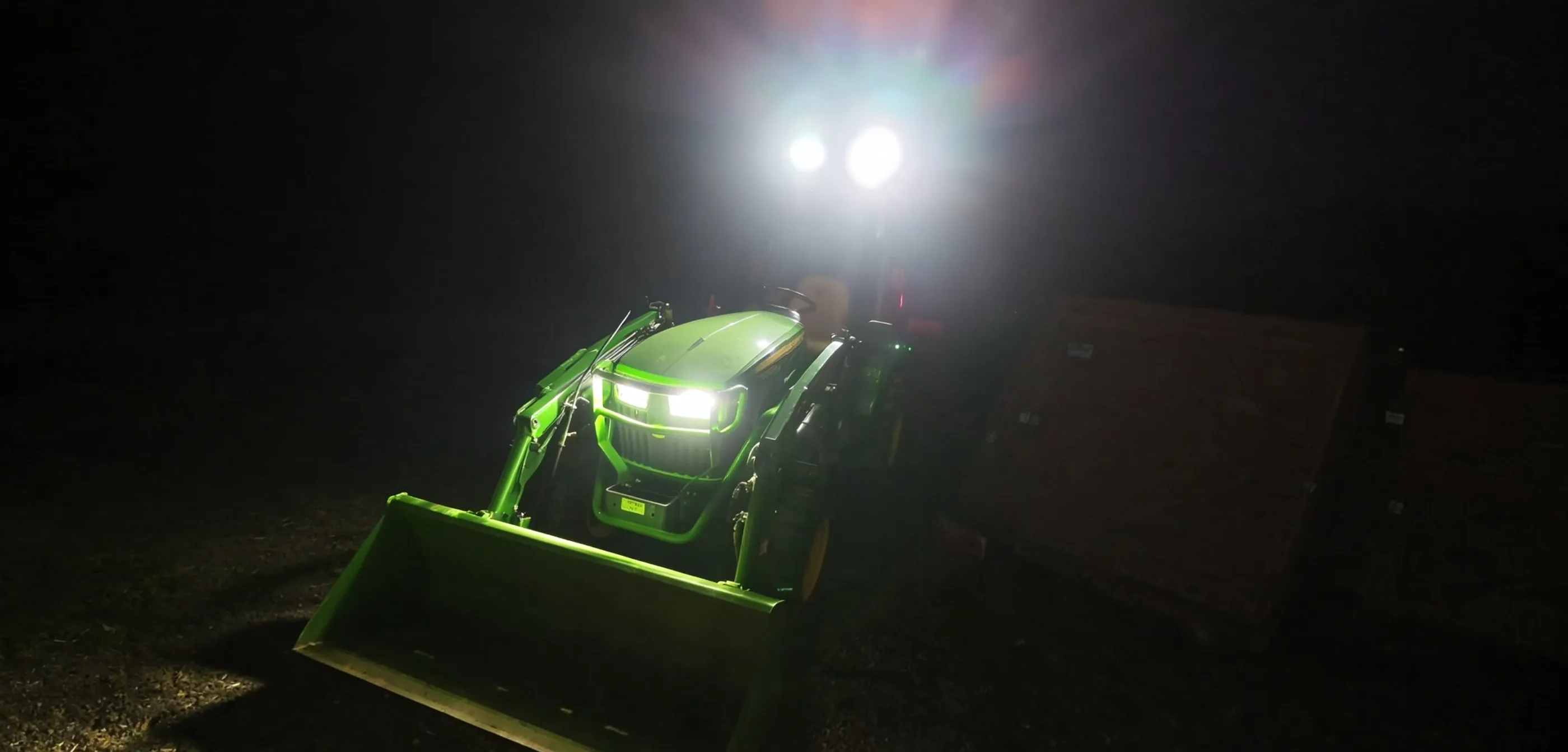
1. Why Install a Light Bar for Tractor?
Factory tractor lights may work well for basic driving. However, they can leave dark spots when you’re working in larger fields or handling equipment at night.
Adding auxiliary lighting can help improve visibility in several situations.
Improve Visibility Around the Tractor
A properly positioned light bar can illuminate areas beyond your factory headlights. This makes it easier to see field edges, fence lines, crop rows, and obstacles.
Wide illumination is especially helpful when turning, backing up, or maneuvering around trailers and implements.
Support Longer Working Hours
Harvesting, feeding livestock, and field maintenance don’t always stop when the sun goes down. Additional lighting helps you continue work without relying entirely on limited factory illumination.
A well-designed lighting setup can also reduce the need to reposition your tractor repeatedly just to get better visibility.
Make Equipment Easier to See
Lighting around the tractor can help you monitor attachments, hydraulic connections, and working areas. This is useful when operating loaders, mowing equipment, or other implements after dark.
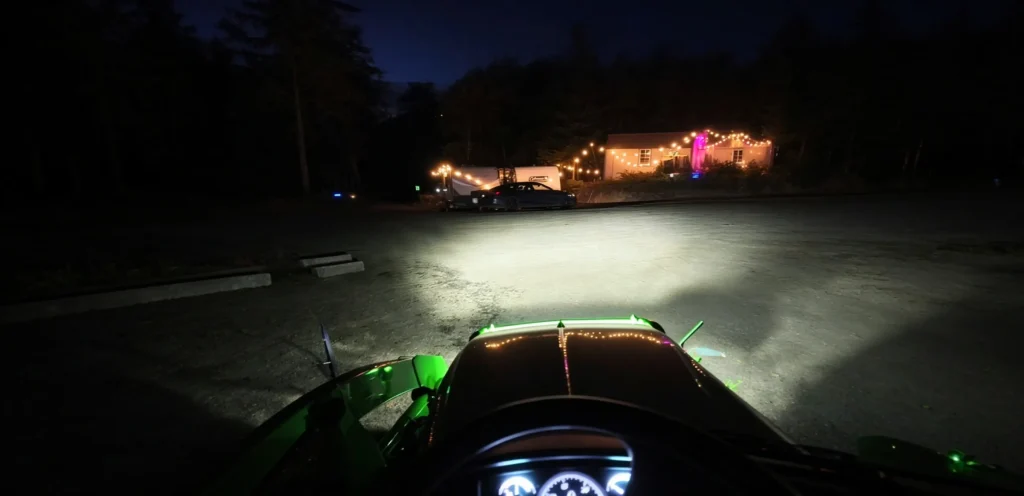
2. What Features Should You Look for?
Choosing the right lighting means considering more than just brightness. Beam coverage, durability, power requirements, and mounting options all matter.
Brightness and Beam Pattern
A high-output LED light bar can provide efficient illumination while using less power than many traditional lighting options.
However, more brightness isn’t always better. The beam pattern should match your work.
- Spot beam:Projects light farther ahead, making it useful for open fields and long-distance visibility.
- Flood beam:Spreads light over a wider area, helping illuminate nearby equipment and work zones.
- Combo beam:Combines distance and wide coverage for more versatile farm applications.
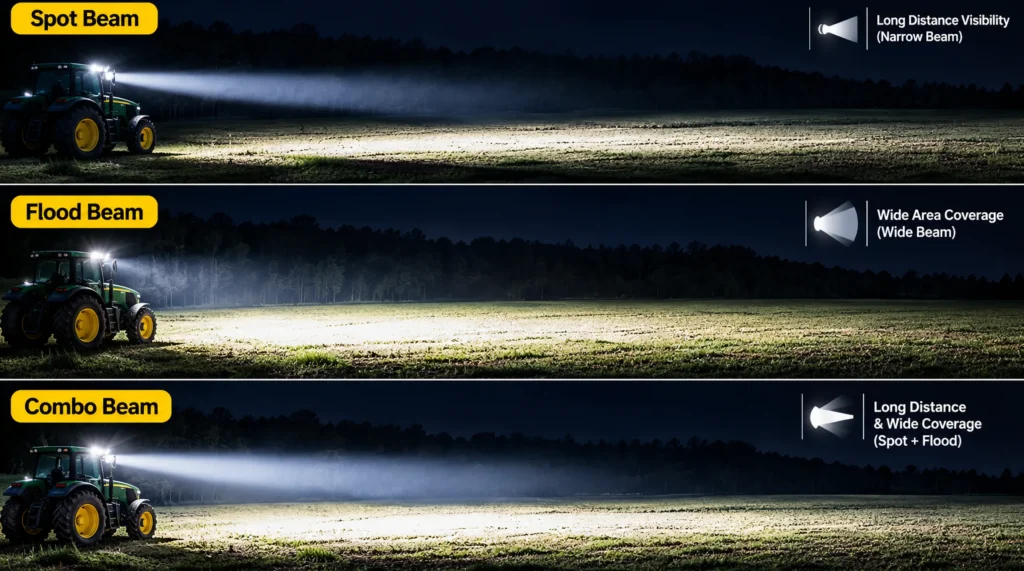
For general farm work, a combo beam can be a practical choice because it balances forward visibility with surrounding coverage.
Color Temperature
A white light bar is commonly preferred for nighttime tractor work because it provides clear visibility of the ground, equipment, and surrounding objects.
Look for lighting that produces consistent illumination without excessive glare. Proper positioning is just as important as color temperature.
Weather Resistance and Durability
Farm equipment regularly encounters dust, mud, vibration, rain, and temperature changes.
Look for a light with a durable housing, sealed construction, and a suitable waterproof rating. Aluminum housings can also help dissipate heat during extended operation.
A reliable light should handle demanding outdoor conditions without requiring constant maintenance.
3. Where Should You Mount Tractor Lighting?
Mounting location affects how much of your work area you can see. Before installing a new light, consider the tasks you perform most often.
Front Mounting
Front-mounted lighting helps illuminate the path ahead. It works well for mowing, field driving, and moving equipment across open land.
Mounting lights higher can improve forward coverage, but avoid aiming them directly into the eyes of other drivers or operators.
Rear Mounting
Rear lighting is useful when backing up, connecting implements, or working with equipment behind the tractor.
A rear-facing work light can help you monitor attachments and nearby obstacles without relying on your tractor’s front lights.
Side Mounting
Side-mounted lights can improve visibility around the tractor. They are particularly helpful when working near buildings, fences, livestock areas, or narrow spaces.
4. How to Choose the Right Setup for Your Work
Different farm tasks require different lighting coverage. Think about where you need light most before choosing a size or configuration.
| Farm Task | Recommended Lighting |
|---|---|
| Field mowing | Wide flood or combo beam |
| Nighttime field driving | Spot or combo beam |
| Loader work | Front and side illumination |
| Backing up trailers | Rear-facing work lights |
| General farm maintenance | Multiple wide-beam lights |
A work light bar may be a good option when you need broad illumination for nearby tasks. Smaller auxiliary lights can also complement a larger bar when you need coverage in specific directions.
Before purchasing, check your tractor’s voltage, available mounting space, wiring capacity, and switch options. Use properly rated wiring, fuses, and connectors for a safe installation, and review applicable lighting requirements when operating vehicles subject to federal regulations.
Conclusion
The right tractor lighting upgrade can make nighttime farm work more manageable. Better visibility helps you identify obstacles, monitor equipment, and illuminate areas that factory lights may leave dark.
When choosing a light bar for tractor applications, focus on beam coverage, brightness, durability, mounting location, and electrical compatibility. A balanced lighting setup can make a real difference during long workdays and after-dark operations.
Choose lighting based on your actual farm tasks, and aim each light carefully to get useful coverage without unnecessary glare.
Frequently Asked Questions (FAQ)
How many watts should a tractor light bar have?
The ideal wattage depends on your tractor, working area, and lighting needs. Consider actual light output, beam pattern, and electrical capacity instead of wattage alone. Are LED light bars good for tractors?
Yes. LED lights offer efficient illumination, long service life, and durable designs. They are popular for tractors used in farming, landscaping, and outdoor work. Can I install a light bar on my tractor myself?
Many tractor lighting upgrades are suitable for DIY installation. Check voltage compatibility, use properly fused wiring, secure mounting brackets, and follow the manufacturer's installation instructions.Share This Article
