

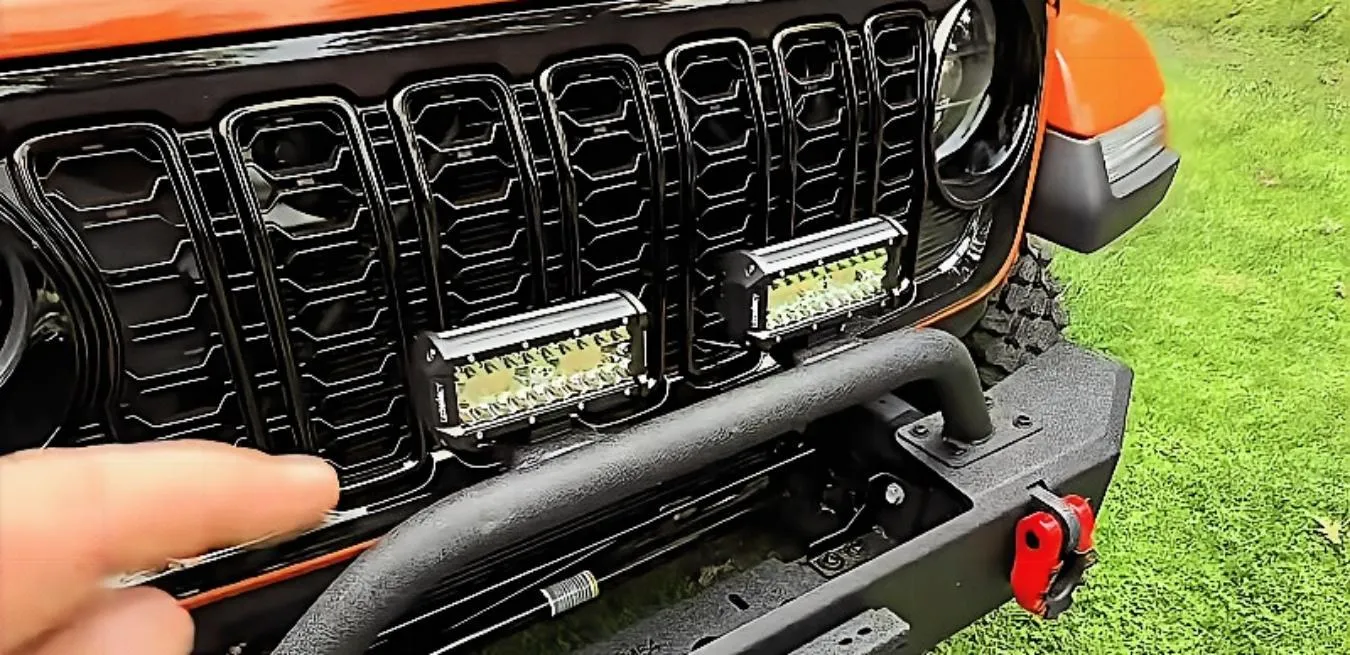
1. Understand Different Beam Patterns for Your Truck
Beam pattern is one of the most important factors when choosing auxiliary truck lighting. It determines how far the light reaches and how much area it covers around your vehicle.
Spot Beam: Focused Light for Long-Distance Visibility
A spot beam produces a narrow, concentrated beam that reaches farther ahead. It works well for open trails, dark country roads, and off-road driving where identifying obstacles at a distance matters.
However, spot beams provide less peripheral coverage. They may not be the best choice when you need to illuminate nearby areas.
Flood Beam: Wider Coverage for Nearby Areas
Flood beams spread light across a wider area. They are useful for nighttime work, campsite setups, and navigating tight trails.
For example, drivers working around farms or loading equipment after sunset may benefit from wider illumination around the front of their trucks.
Spot Flood Combo: A Balanced Lighting Option
A spot flood combo LED light bar combines focused distance lighting with wider peripheral coverage. This makes it a versatile option for drivers who need both forward visibility and a broader view of their surroundings.
| Beam Pattern | Main Advantage | Best Application |
|---|---|---|
| Spot | Focused, longer-range illumination | Open trails and country roads |
| Flood | Wide-area coverage | Ranch work and nearby tasks |
| Combo | Distance and wider coverage | General off-road driving |
2. Choose the Right Light Bar Size for Your Bumper
The size of your auxiliary light affects installation flexibility, appearance, and lighting coverage. Before purchasing, measure the available mounting space on your truck bumper.
When Should You Choose a 7 Inch LED Light Bar?
A 7 inch LED light bar is a compact option for drivers who want additional lighting without installing a large light bar across the front bumper.
It can work well for:
- Pickup trucks with limited bumper mounting space.
- Off-road vehicles needing compact auxiliary lighting.
- Drivers adding multiple small lights to different mounting positions.
- Buyers looking for a clean, low-profile lighting setup.
Smaller lights are generally easier to position in tight spaces. However, actual output and coverage depend on LED configuration, optics, and product design.
Consider Larger Light Bars for Wider Coverage
Larger LED light bars may provide broader illumination when properly designed and installed. They are worth considering if you frequently drive through dark trails or need additional lighting for nighttime work.
Before choosing, check the following:
- Available bumper mounting width.
- Bracket compatibility and mounting depth.
- Clearance around the grille and other components.
- Wiring access and power requirements.
- Whether the light interferes with sensors or other equipment.
3. Is an Amber LED Light Bar Right for Your Driving Conditions?
Color temperature and light color can influence how auxiliary lighting performs in different environments.
An amber LED light bar is a popular option for off-road drivers, particularly when driving through dusty trails, muddy areas, or environments with reduced visibility.
Amber light can appear less harsh in certain conditions. However, it does not automatically eliminate glare or improve visibility in every type of weather.
White vs. Amber LED Lighting
White LED lighting is commonly used for general nighttime illumination because it provides a bright, clear view of the surrounding environment.
Amber lighting offers a different visual appearance and can be useful for certain off-road conditions. Some drivers prefer having both options available.
Consider these differences:
| Lighting Color | Main Characteristics | Common Applications |
|---|---|---|
| White | Clear general illumination | Night driving and work lighting |
| Amber | Warm-colored illumination | Dusty trails and off-road conditions |
| White + Amber | Flexible lighting options | Changing outdoor environments |
If you frequently switch between nighttime driving and off-road work, a light with selectable white and amber modes may offer additional flexibility.

4. Check Installation, Durability, and Compatibility
Even a well-designed LED light bar may not perform as expected if it is installed incorrectly or does not fit your vehicle.
Before purchasing, review the product specifications and installation requirements.
Mounting Compatibility: Check whether the included brackets fit your bumper or require additional mounting hardware. A secure installation helps reduce vibration during rough driving.
Weather Protection: Look for an appropriate IP rating. For example, IP67 and IP68 indicate different levels of protection against dust and water under specified testing conditions. Always check the manufacturer’s testing details.
Housing Material: Aluminum housings are commonly used in automotive LED lighting because they provide structural support and help manage heat.
Electrical Requirements: Confirm the operating voltage, current draw, wiring harness compatibility, and fuse requirements. Avoid connecting auxiliary lights without checking the vehicle’s electrical capacity.
Road Regulations: Auxiliary lighting rules vary by state and application. Check local regulations before using aftermarket light bars on public roads. Some setups may be intended only for off-road use.
Conclusion: Find the Best Truck Bumper LED Light Bar for Your Needs
Choosing the right truck bumper LED light bar starts with understanding how and where you use your vehicle. A spot beam is useful for long-distance illumination, while flood lighting provides wider coverage. A spot flood combo offers a practical balance for general off-road driving. Compact options like a 7 inch LED light bar suit smaller mounting spaces, while amber lighting adds another option for challenging outdoor environments.
Before buying, compare beam patterns, dimensions, mounting compatibility, weather protection, and electrical requirements. The best setup is the one that matches your driving conditions and provides useful illumination without compromising safe installation.
Frequently Asked Questions
What is the best beam pattern for a truck bumper LED light bar?
A combo beam is a versatile choice for many truck owners because it combines focused forward illumination with wider coverage. However, spot and flood beams may be better depending on whether you prioritize distance or nearby visibility. Is a 7 inch LED light bar bright enough for off-road driving?
A 7 inch LED light bar can provide useful auxiliary lighting for compact off-road setups. Its actual performance depends on LED output, reflector design, beam pattern, and installation position rather than size alone.Are amber LED light bars better than white LED light bars?
Not necessarily. White lighting is versatile for general nighttime visibility, while amber lighting may be preferred in certain dusty or off-road environments. Your choice should depend on driving conditions, beam performance, and local lighting regulations.Share This Article
